AppCloudAI vs Traditional App Stores for AI-Powered App Distribution
AppCloudAI vs Traditional App Stores: The New Standard for AI‑Powered App Distribution
The app marketplace is changing fast. For years, traditional app stores have been the default channel for publishing, discovering, and updating software. They created a centralized system that made distribution simple, but they also introduced limits around visibility, approvals, fees, and personalization.
Now, a new model is emerging. AppCloudAI vs Traditional App Stores is not just a comparison of two delivery methods. It reflects a bigger shift toward AI-powered app distribution, where speed, personalization, and intelligent matching matter as much as app availability.

Why Traditional App Stores No Longer Fit Every App
Traditional app stores were built for a broad consumer audience. Their structure works well for mainstream apps, but it often creates friction for developers and users looking for more targeted experiences.
Common limitations of traditional app stores
- Long review and approval cycles
- High competition with limited discoverability
- Standardized listing formats with little flexibility
- Platform fees that affect margins
- One-size-fits-all recommendations
For developers, getting noticed can be harder than building the app itself. For users, discovery often depends on rankings, ads, or broad category placement rather than true relevance.

That model made sense when mobile distribution was mostly about scale. But in an AI-first world, scale alone is no longer enough.

What Makes AppCloudAI Different
AppCloudAI represents a more adaptive approach to app delivery. Instead of relying only on static listings and generic categories, it uses intelligence to connect apps with the right users, use cases, and environments.
This is where AI-powered app distribution becomes a real advantage.
Key strengths of AppCloudAI
1. Smarter discovery
Traditional app stores mainly surface apps through search keywords, download volume, ratings, and paid promotion. AppCloudAI can go beyond that by using AI to understand behavior, intent, and context.
That means users are more likely to see apps that fit their actual needs, not just the apps with the biggest marketing budget.
2. Faster distribution workflows
AppCloudAI can reduce the friction associated with old publishing processes. In environments where speed matters, developers benefit from a system that supports quicker iteration, deployment, and updates.
For AI-based apps that evolve rapidly, this flexibility is critical.
3. Better personalization
AI can tailor recommendations based on user preferences, usage patterns, industry, or business goals. This creates a more relevant experience than the usual “top charts” model.
Instead of browsing endless categories, users can find solutions aligned with what they are trying to accomplish.
4. Support for dynamic apps
Many modern applications are no longer static products. They learn, adapt, and update continuously. Traditional app stores were not designed for this kind of living software.
AppCloudAI is better aligned with platforms that need continuous optimization, model updates, and intelligent delivery.
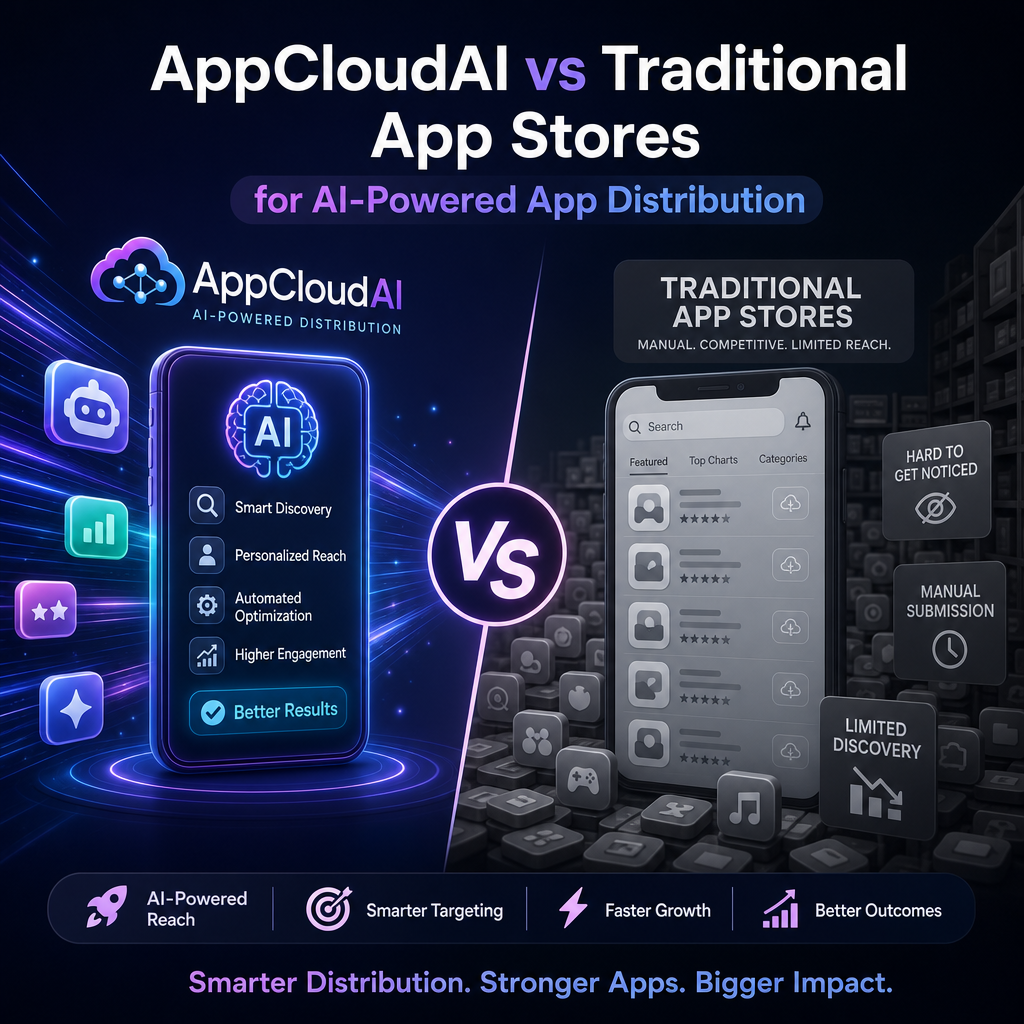
AppCloudAI vs Traditional App Stores: The Core Differences
To understand the shift, it helps to compare the two models directly.
Traditional app stores focus on:
- Centralized control
- Mass-market visibility
- Static listings
- Standard review processes
- Broad distribution across large audiences
AppCloudAI focuses on:
- Intelligent matching
- Context-aware recommendations
- Faster and more flexible delivery
- Better support for AI-native apps
- Personalized user journeys
The biggest difference is not just where the app appears. It is how the app reaches the user, how quickly it can evolve, and how effectively it is matched to demand.
Why AI-Powered App Distribution Matters Now
The rise of AI tools, workflow automation, and personalized software experiences has changed user expectations. People no longer want to sift through thousands of options to find the right app. They expect platforms to do more of the work for them.
That is why AI-powered app distribution is becoming the new standard.
It can improve:
- Discovery: More relevant app recommendations
- Conversion: Better alignment between user needs and product value
- Retention: Personalized onboarding and usage experiences
- Developer efficiency: Faster feedback loops and rollout cycles
In short, AI distribution is not just a technical improvement. It is a better business model for modern software ecosystems.
What This Means for Developers
For developers, the shift from traditional stores to platforms like AppCloudAI creates new opportunities.
Benefits for app creators
Improved visibility for niche products
Specialized apps often struggle in mainstream marketplaces. AI-driven distribution can surface them to exactly the right audience.
More control over growth
Developers can focus less on gaming store rankings and more on building quality products that match real user intent.
Better fit for rapid innovation
Apps powered by AI often need continuous tuning and updates. A flexible distribution environment supports that reality far better than rigid store pipelines.
What This Means for Users
Users benefit just as much as developers. Instead of relying on crowded storefronts and generic rankings, they get a more guided and relevant discovery experience.
That means:
- Less time searching
- More accurate app recommendations
- Faster access to useful tools
- Experiences tailored to specific goals or industries
As software becomes more intelligent, the way people discover it should become more intelligent too.
The Future of App Distribution
Traditional app stores are not disappearing overnight. They still serve an important role in broad consumer access. But they are no longer the only standard, and in many cases, they are no longer the best one.
The real momentum is moving toward ecosystems that are faster, smarter, and more adaptive. That is why the discussion around AppCloudAI vs Traditional App Stores matters.
It signals a transition from static marketplaces to intelligent delivery networks built for modern apps and modern users.
Final Thoughts
The future belongs to platforms that can do more than host apps. They need to understand users, support rapid change, and deliver relevance at scale.
That is exactly why AI-powered app distribution is gaining ground. In the debate of AppCloudAI vs Traditional App Stores, the difference is clear: one model is built for the past, while the other is designed for the next generation of software.