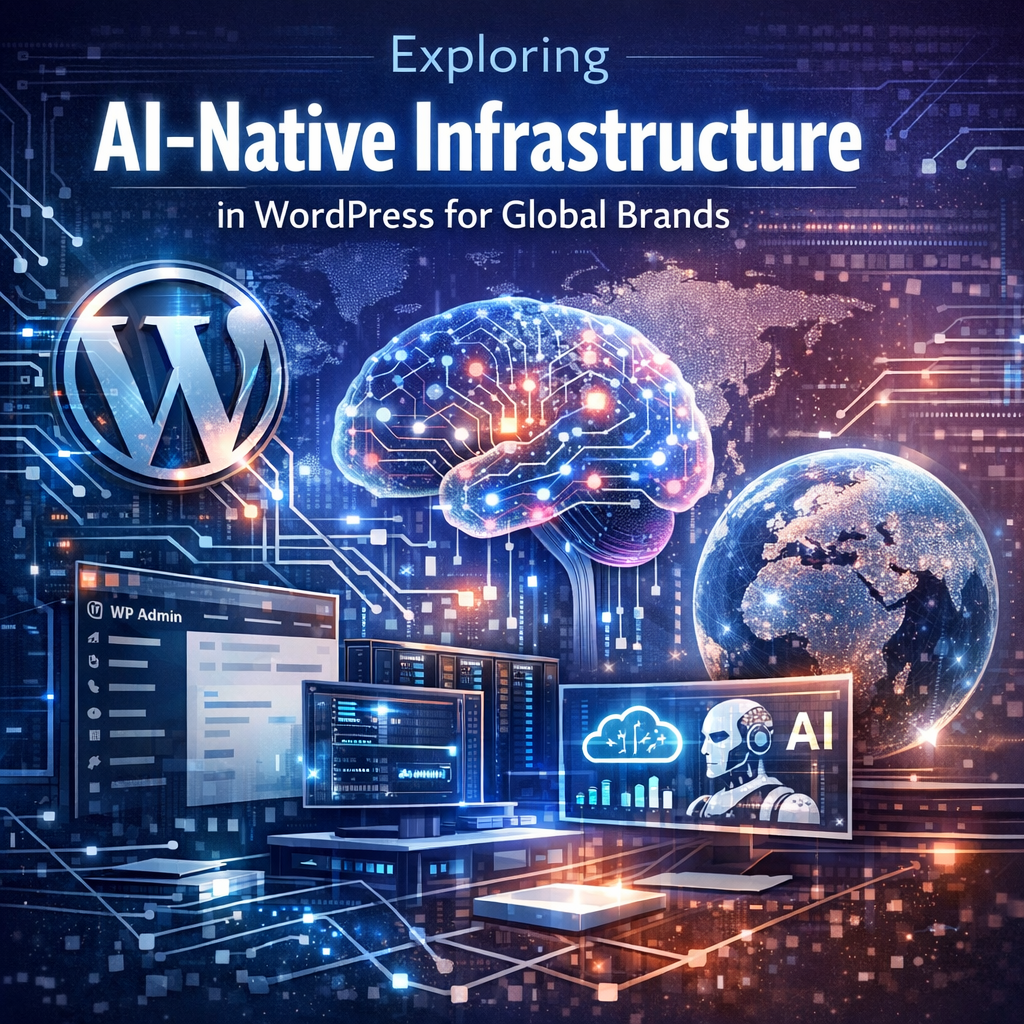
Exploring AI-Native Infrastructure in WordPress for Global Brands
The Future of WordPress: AI‑Native Infrastructure for Global Brands
WordPress has long been a dominant force in the CMS (Content Management System) landscape, credited with powering an impressive portion of the web. However, the digital front is ever-evolving with the integration of AI technologies. As global brands continuously seek robust, innovative solutions for digital content management and customer engagement, WordPress is positioned uniquely to integrate AI-native features. This expansion into AI-driven platforms is not just a trend but a transformational shift that outlines the future of WordPress in serving large-scale, global businesses.
Understanding the Current WordPress Ecosystem
The Foundation
Presently, WordPress offers a highly customizable platform that benefits from a vast ecosystem of themes, plugins, and community support. It is favored for its flexibility, ease of use, and scalability, which makes it an ideal choice for businesses of all sizes.

Plugins and Integrations
WordPress’s strength lies in its extensibility through plugins. Currently, there are plugins for almost any functionality a site may need, from SEO optimization tools like Yoast SEO to e-commerce solutions like WooCommerce.
The Rise of AI and Its Integration into WordPress
AI in Today’s Digital Tools
Artificial Intelligence is being progressively adopted in various sectors, automating tasks, providing predictive analysis, and enhancing customer interactions. In the realm of digital content management, AI can streamline operations, offer personalized experiences, and improve decision-making processes.

Examples of AI Use in WordPress
Several plugins and tools have begun to reflect this AI integration. For example:

- Jetpack’s proofreading feature uses natural language processing to analyze written content.
- Akismet utilizes machine learning to filter out spam comments effectively.
While these applications are just the beginning stages of AI adoption, they signal a clear path towards more integrated solutions.
Future Predictions: WordPress as an AI-Native Platform
To meet the needs of global brands, WordPress must evolve into an AI-native platform. This means that AI is not just a feature added via plugins but is embedded into the core functionality of WordPress.
Predictive AI Features
- Content Personalization: AI could analyze visitor data to tailor the website content dynamically, enhancing user engagement and satisfaction.
- SEO Optimization: AI-driven tools could autonomously optimize content for search engines, adjusting to the algorithm changes in real-time.
- Accessibility Enhancements: AI can also be used to improve website accessibility in real-time, adapting content to meet diverse user needs without human intervention.
Automation Through AI
- Automated Content Creation: Tools powered by AI could assist in generating basic content drafts based on given topics or keywords, significantly speeding up the content creation process.
- Maintenance and Security: AI can predict security vulnerabilities and automate the maintenance tasks, keeping the site secure without constant human oversight.
Enhanced Analytics
AI can go beyond traditional analytics to provide deeper insights into user behavior, content performance, and even predict future trends, helping brands stay ahead in their market.
Case Studies: AI Success Stories in WordPress
Large Retail Chain
A multinational retail chain implemented an AI-powered personalization plugin on their WordPress site, resulting in a 30% increase in conversion rates. The AI analyzed user behavior to display personalized product recommendations, leading to higher engagement and sales.
News Portal
A popular news portal used an AI system to manage the delivery of content based on reader preferences and past reading habits. This not only increased reader engagement but also boosted subscription rates as users felt the content was highly tailored to their interests.
Strategic Implementation of AI in WordPress for Global Brands
Steps for Integration
- Assess Needs: Understand what tasks or functions could be improved with AI.
- Choose the Right Tools: Select AI-powered plugins or develop bespoke solutions if necessary.
- Continuous Learning and Adaptation: AI technologies evolve, so continuous monitoring and adaptation are vital.
Challenges and Considerations
- Privacy and Data Security: Implementing AI requires handling a lot of data, which must be managed securely to protect user privacy.
- Ethical AI Use: Brands need to ensure their AI implementations are not biased and ethically sound.
- Costs: While AI can save costs in the long run, initial investments can be significant, especially for custom solutions.
Conclusion
The future of WordPress as an AI-native platform looks promising and inevitable. As global brands push for more sophisticated, automated, and personalized digital experiences, WordPress needs to incorporate AI at its core to stay relevant and competitive. The transition to an AI-native infrastructure will not only enhance the functionality and efficiency of WordPress but also redefine how global brands interact with their audience online. This shift is crucial for WordPress to maintain its leadership in the CMS market and continue to empower businesses around the world with top-notch digital tools.