
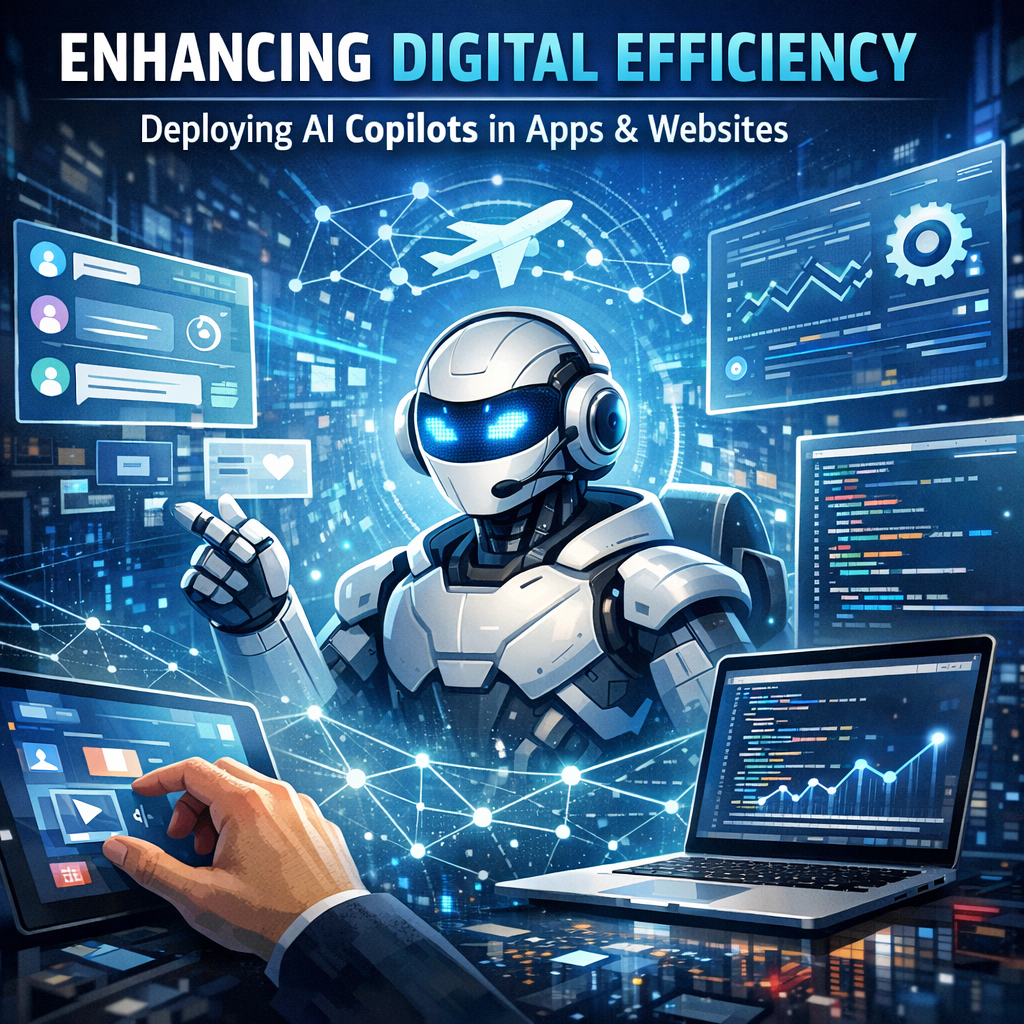
Enhancing Digital Efficiency: Deploying AI Copilots in Apps and Websites
Deploying AI Copilots Across Websites, Apps, and Workflows
The implementation of artificial intelligence (AI) is not just a trend, it’s a robust strategy to enhance interaction, operational efficiency, and overall user experience across various digital platforms—particularly through AI copilots. Deploying these AI-driven assistants in websites, mobile apps, and workflows can revolutionize the way businesses interact with their customers and streamline internal processes.
What is an AI Copilot?
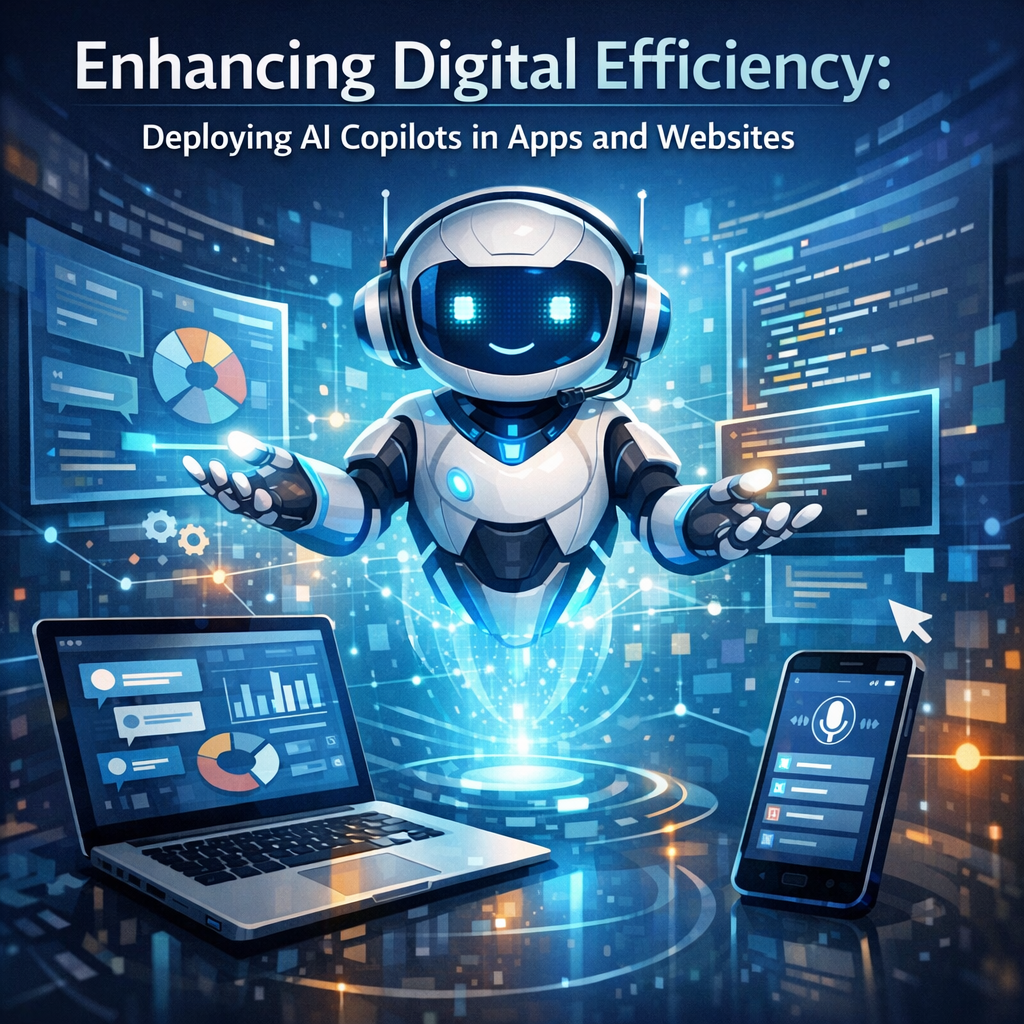
AI copilots are advanced AI systems designed to assist users by simulating human-like interactions and automating tasks. They integrate with digital platforms to provide support, perform tasks, gather insights, and facilitate a smoother digital interaction experience.

Benefits of AI Copilots
Incorporating AI copilots can bring a plethora of benefits:
Enhanced User Experience
- Immediate Response Time: AI copilots can provide instant responses to user inquiries, significantly reducing wait times and enhancing user satisfaction.
- 24/7 Availability: Unlike human counterparts, AI copilots can operate around the clock, ensuring users always have support.
Increased Efficiency
- Automation of Repetitive Tasks: AI copilots can handle routine tasks, freeing up human resources for more complex issues.
- Data Handling Capabilities: With their ability to rapidly process and analyze large amounts of data, AI copilots can streamline decision-making processes.
Personalization
- Adaptive Interactions: AI copilots can learn from user interactions to provide tailored responses, creating a more personalized user experience.
Implementing AI Copilots in Websites
Deploying AI copilots on websites can significantly enhance the way businesses interact with their online visitors. Here’s how to implement them effectively:

Choose the Right Platform
It’s crucial to select an AI platform that integrates seamlessly with your existing website infrastructure and aligns with your business goals.

Focus on User Needs
Understanding user needs and behaviors allows for a more targeted AI copilot deployment, ensuring it adds value where it’s most needed.
Continual Learning and Updating
AI copilots should continually learn from interactions to improve their accuracy and effectiveness. Regular updates and training with new data are essential.
Leveraging AI Copilots in Mobile Apps
Mobile applications can significantly benefit from the integration of AI copilots. Here are key strategies for deployment:
Enhance User Interface Interactions
AI copilots can guide users through complex app functionalities and improve navigation through voice or text-based interactions.
Improve Personalization
Deploy AI technologies to analyze user preferences and behaviors within the app, providing customized recommendations and content.
Ensure Scalability
Ensure the AI system can scale as app usage grows to maintain performance and responsiveness.
Optimizing Workflows with AI Copilots
AI copilots can transform organizational workflows by automating and optimizing processes. Here’s how:
Identify Bottlenecks
Use AI to identify inefficiencies and bottlenecks in current workflows and automate these to increase productivity.
Enhance Communication
Implement AI tools to facilitate better communication between teams and departments, thus speeding up information exchange and decision-making.
Predictive Analysis
Utilize AI for predictive analysis to forecast workflow outcomes and adjust processes proactively.
Challenges and Considerations
While the benefits are significant, deploying AI copilots does come with challenges:
- Privacy and Security: Ensuring user data privacy and securing interactions from potential breaches is paramount.
- Integration Complexities: Seamless integration with existing systems can be complex and requires careful planning and execution.
- Costs: Initial setup and ongoing maintenance of AI systems can be costly and should be factored into the decision-making process.
Conclusion
The deployment of AI copilots across websites, apps, and workflows is more than a technological upgrade; it is a strategic move towards more efficient, personalized, and user-friendly digital interactions. By understanding the benefits and challenges, and implementing best practices, businesses can greatly enhance their digital landscapes and provide superior user experiences. As AI technology continues to evolve, its integration into digital platforms will become increasingly critical for maintaining competitive advantage and achieving operational excellence.