The Rise of Agentic App Exchanges on AppCloudAI
The Rise of Agentic App Exchanges: Why Developers Are Moving to AppCloudAI
Software development is entering a new phase.
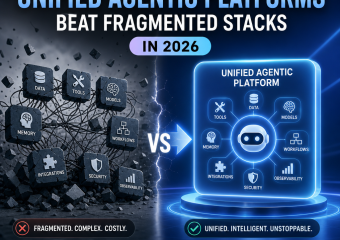
For years, developers relied on app stores, API marketplaces, open-source repos, and cloud dashboards as separate tools. That model worked, but it also created friction. Building modern applications now means stitching together services, automations, AI models, workflows, and deployment layers across too many disconnected platforms.

That is why Agentic App Exchanges are gaining attention.
Instead of acting like passive marketplaces, these platforms are designed to help developers discover, compose, deploy, and manage intelligent applications faster. And among the emerging options, AppCloudAI is becoming a serious destination for teams that want more than just another listing site.

What Is an Agentic App Exchange?
An Agentic App Exchange is more than a catalog of apps or templates.

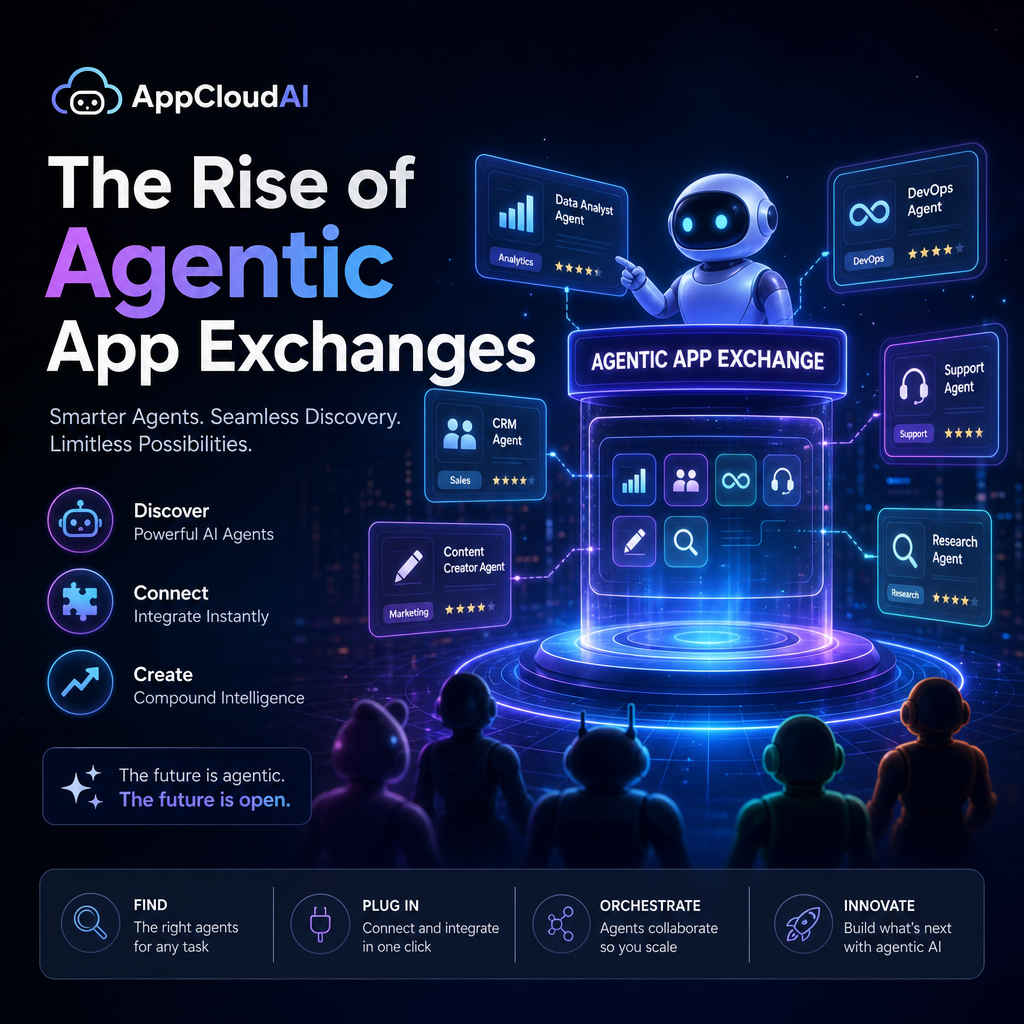
It combines the discoverability of a marketplace with the action-oriented power of AI agents, integrations, and deployment tooling. In practical terms, developers can find components, connect them into working flows, customize behavior, and launch solutions without jumping across multiple platforms.
The key idea is simple: the exchange does not just show what is available. It helps move work forward.
That shift matters because developers increasingly want platforms that reduce setup time and operational overhead, not ones that simply add another layer of browsing.
Why Traditional App Marketplaces Are Falling Short
Classic app stores were designed for manual selection and installation. That model feels outdated in an AI-first environment.
Developers today need tools that can support:
- rapid prototyping
- multi-service orchestration
- low-friction deployment
- reusable workflows
- intelligent automation
- fast iteration across teams
Traditional marketplaces often stop at discovery. After that, developers still need to handle integrations, permissions, hosting, configuration, scaling, and monitoring on their own.
The result is familiar: slow launches, duplicated effort, and too much glue code.
As applications become more dynamic and agent-driven, developers are looking for platforms that bring these steps closer together.
Why the Demand Is Growing Now
The rise of AI agents is changing how software gets built.
Teams are no longer creating only static apps. They are building systems that can reason, trigger actions, connect with APIs, respond to events, and collaborate with users in real time. That requires a new kind of platform architecture.
Several trends are driving this demand:
AI Is Becoming a Native Part of the Stack
AI is no longer a side feature. It is becoming part of core product logic.
Developers need environments where models, agents, automations, and app components can work together without excessive setup.
Speed Has Become a Competitive Advantage
Shipping faster matters.
Whether it is a startup testing a new workflow product or an enterprise modernizing internal operations, teams want to move from idea to usable app in days, not months.
Integration Complexity Keeps Growing
Every new tool promises productivity. But each added tool also introduces more configuration, maintenance, and data movement.
An Agentic App Exchange helps reduce that sprawl by centralizing how intelligent components are discovered and used.
Why Developers Are Moving to AppCloudAI
AppCloudAI is attracting attention because it aligns with how developers actually want to build today.
Rather than treating apps as isolated downloads or static assets, it supports a more connected, agent-driven development model. That matters to teams trying to reduce manual effort and create production-ready solutions faster.
Here are a few reasons developers are making the shift.
1. Faster Composition of Intelligent Apps
Developers want reusable building blocks.
AppCloudAI makes it easier to assemble applications from AI-enabled components, services, and workflows instead of starting from scratch every time. That accelerates experimentation while preserving flexibility.
2. Less Platform Fragmentation
One of the biggest pain points in modern development is context switching.
When discovery, orchestration, deployment, and automation happen across separate tools, productivity suffers. AppCloudAI reduces that fragmentation by bringing more of the workflow into one environment.
3. Better Fit for Agent-Based Workflows
As more products rely on task automation, decision logic, and autonomous interactions, developers need infrastructure that supports agent behavior by design.
That makes AppCloudAI especially appealing for teams building beyond simple app templates.
4. More Practical Path From Prototype to Production
A lot of AI tooling is great for demos but weak in real deployment scenarios.
Developers are moving toward platforms that help close the gap between experimentation and operational use. AppCloudAI stands out because it is positioned around usable, deployable app experiences rather than isolated proofs of concept.
What Developers Should Look for in an Agentic App Exchange
Not every platform using AI language delivers real developer value.
When evaluating an Agentic App Exchange, it helps to focus on a few essentials:
- Composable architecture for combining services and workflows
- Deployment support that goes beyond simple previews
- Integration readiness with common tools and APIs
- Reusability for teams building at scale
- Automation-friendly design for agent-led actions
- Developer experience that reduces friction instead of adding it
Platforms that score well in these areas are more likely to become part of the long-term stack.
The Bigger Shift Ahead
The rise of Agentic App Exchanges reflects a broader change in software development.
Developers are moving away from passive marketplaces and toward active platforms that help them build, connect, and deploy intelligent applications with less overhead. In that environment, AppCloudAI is gaining traction because it speaks to the real needs of modern teams: speed, flexibility, and a more unified workflow.
As AI agents become a larger part of product development, the platforms that win will not just host apps.
They will help create them.
And that is exactly why more developers are moving to AppCloudAI.