How AppCloudAI Is Building the World’s Most Powerful Agentic App Marketplace
How AppCloudAI Is Building the World’s Most Powerful Agentic App Marketplace
Artificial intelligence is moving beyond chatbots and single-purpose tools. The next wave is agentic apps—software powered by AI agents that can reason, take action, connect with other systems, and complete real business tasks with minimal human input.
That shift is exactly where AppCloudAI is focused.

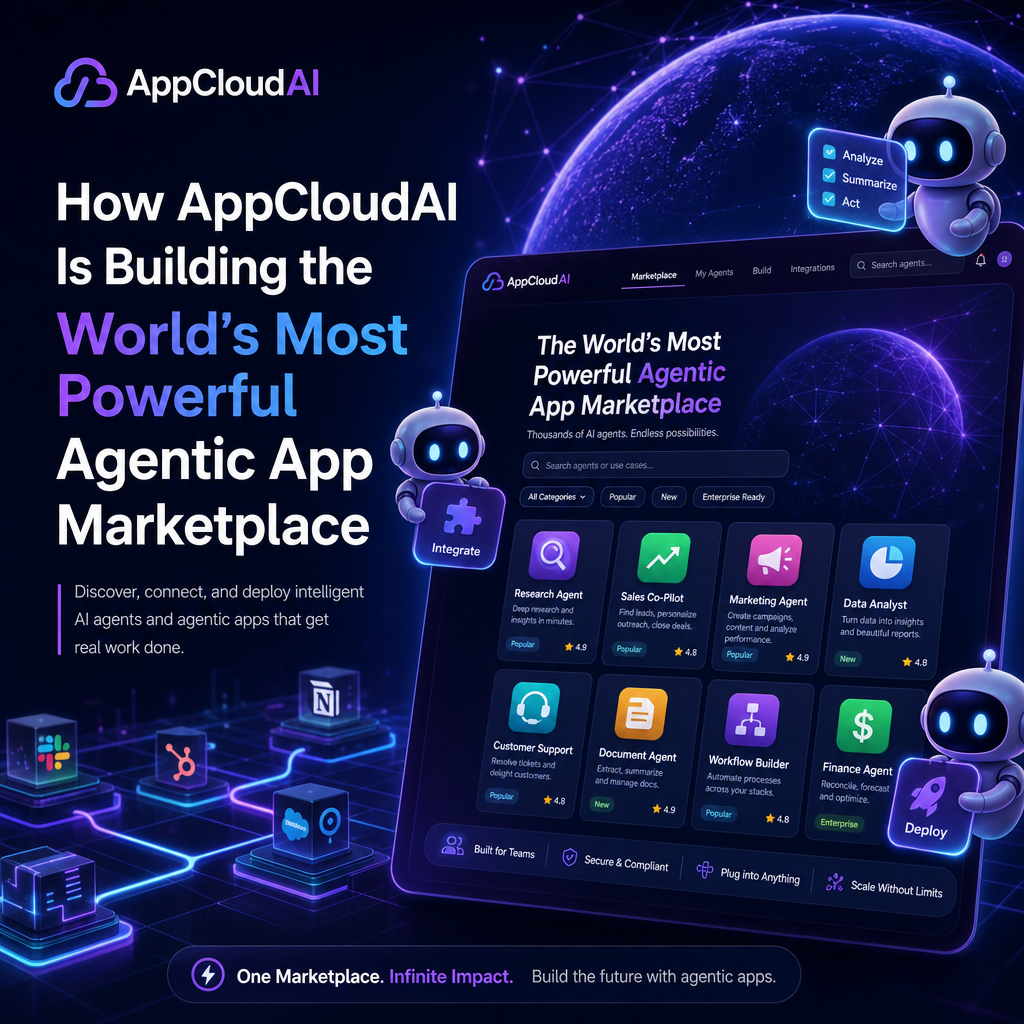
Instead of treating AI as a feature, AppCloudAI is building a full agentic app marketplace: a platform where businesses can discover, deploy, and scale AI-powered applications designed to act, automate, and adapt. The goal is ambitious, but the opportunity is even bigger. As organizations search for faster ways to improve productivity, reduce manual work, and unify workflows, marketplaces like this could become the front door to enterprise AI.
What Makes an App “Agentic”?
Traditional apps usually wait for input. Agentic apps go further.

They can:

- understand goals instead of just commands
- break work into steps
- use tools and APIs to complete tasks
- learn from context and prior actions
- collaborate with humans and other systems
For example, an agentic sales app might not just summarize leads. It could qualify them, draft outreach, update a CRM, schedule follow-ups, and alert a rep when human judgment is needed.
That level of autonomy is what makes the category so powerful—and what makes a dedicated marketplace so valuable.
Why the Market Needs an Agentic App Marketplace
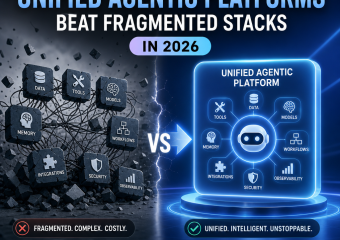
The AI ecosystem is crowded, but also fragmented.
Companies are dealing with dozens of disconnected tools, niche copilots, and one-off automations. Many products solve a small part of the problem, but few offer a clear path to deployment, governance, and integration at scale.
An agentic app marketplace changes that by creating a centralized environment where users can:
- browse validated AI applications
- compare use cases across departments
- deploy solutions faster
- integrate with existing business systems
- manage security, permissions, and performance in one place
This is where AppCloudAI’s model becomes compelling. It is not just building another AI product. It is building the infrastructure for how AI-native software gets adopted across organizations.
AppCloudAI’s Core Advantage: A Platform, Not Just a Store
The strongest marketplaces do more than list products. They create an ecosystem.
AppCloudAI appears to be building around that principle by combining discovery, deployment, orchestration, and scalability into one experience. That matters because agentic apps are not static downloads. They are living systems that depend on data, workflows, model performance, and business logic.
1. Curated, Outcome-Driven Apps
A powerful marketplace needs quality control.
Businesses do not want to test hundreds of experimental agents with unclear value. They want trusted solutions tied to real outcomes—customer support automation, finance operations, HR workflows, procurement tasks, and more.
By focusing on use-case-driven agentic apps, AppCloudAI can reduce the noise and increase adoption.
2. Integration Across the Enterprise Stack
Agentic apps are only useful if they can connect to the tools companies already use.
That means integrations with:
- CRMs
- ERPs
- support platforms
- communication tools
- data warehouses
- internal knowledge systems
AppCloudAI’s long-term strength will depend on how well its marketplace lets apps interact with the broader software environment. The more connected the ecosystem, the more valuable each agent becomes.
3. Orchestration and Multi-Agent Potential
The real future is not just one agent per task. It is multiple agents working together.
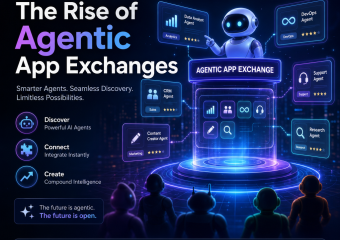
An agentic app marketplace can evolve from a catalog of standalone tools into a network of specialized agents that collaborate across workflows. One agent may gather data, another may analyze it, and a third may take action or generate approvals.
If AppCloudAI enables that kind of orchestration, it moves from marketplace provider to operating layer for AI-driven work.
Trust, Governance, and Enterprise Readiness
Power alone is not enough. Enterprises need control.
One of the biggest barriers to AI adoption is trust: trust in outputs, data handling, permissions, compliance, and reliability. AppCloudAI has a major opportunity if it can make governance a native part of the marketplace experience rather than an afterthought.
That includes features such as:
- role-based access controls
- audit trails
- model transparency
- usage monitoring
- approval workflows
- secure data connections
In other words, the winning agentic app marketplace will not just be the smartest. It will be the safest and easiest to manage at scale.
Why This Model Could Reshape Software Distribution
App marketplaces are not new. What is new is the nature of the product being distributed.
In the past, software was mostly static: install it, configure it, and use it. Agentic apps are different. They can improve over time, respond to goals, and become active participants in business operations.
That changes what customers expect from a marketplace.
They are no longer shopping only for features. They are shopping for capability, automation, and leverage. AppCloudAI is positioning itself around that shift by treating AI agents as deployable digital workers rather than simple software tools.
The Bigger Picture
If AppCloudAI succeeds, it could help define how businesses adopt the next generation of AI applications.
The company’s vision points toward a future where organizations do not build every AI workflow from scratch. Instead, they choose from a trusted marketplace of agentic apps, plug them into their systems, and scale them across teams.
That is a meaningful leap forward.
The race in AI is no longer just about better models. It is about better delivery, better usability, and better real-world execution. By building an agentic app marketplace designed for discovery, integration, and enterprise scale, AppCloudAI is aiming at the center of that opportunity.
And if the platform can combine autonomy, trust, and orchestration in one place, it may not just participate in the next chapter of software—it may help write it.