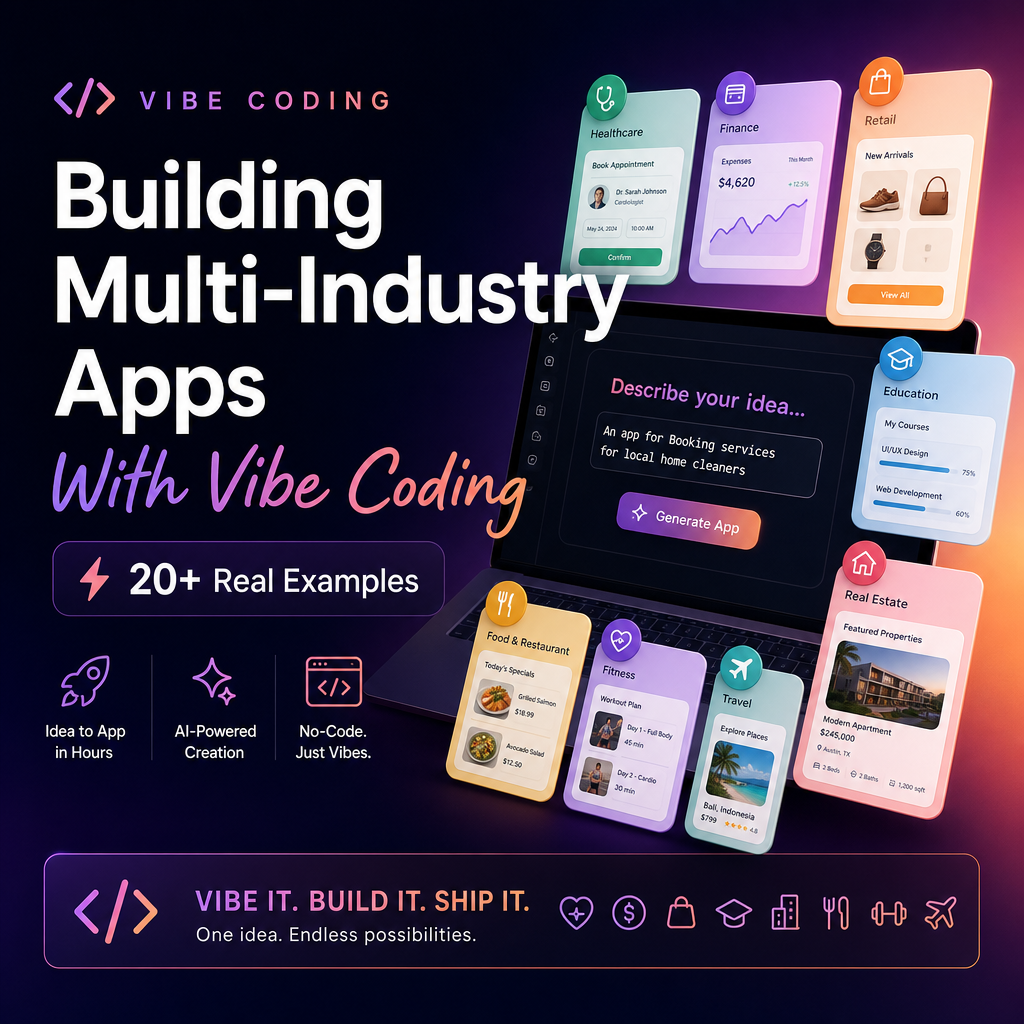
Building Multi-Industry Apps With Vibe Coding: 20+ Real Examples
Building Multi-Industry Apps With Vibe Coding: Real Examples Across 20+ Verticals
Building apps used to start with long specs, wireframes, and months of development. Today, building multi-industry apps with vibe coding looks very different.
Vibe coding is a fast, AI-assisted way to turn ideas into working software. Instead of beginning with heavy technical planning, teams describe workflows, user roles, and desired outcomes in plain language, then use AI tools to generate interfaces, logic, and integrations. The result is quicker prototyping, faster validation, and a much lower barrier to launching niche products.

That matters because every industry has unique workflows, but many share the same app foundations: forms, dashboards, approvals, messaging, scheduling, payments, and reporting.
Why Vibe Coding Works Across Industries
The biggest advantage of vibe coding is flexibility.

A healthcare intake tool, a logistics dashboard, and a salon booking app may serve different users, but they often rely on similar building blocks. With the right prompts, reusable components, and AI-generated logic, teams can adapt one framework into many vertical-specific products.

This makes vibe coding especially useful for:
- MVP development
- Internal operations tools
- Client portals
- Mobile-first field apps
- Workflow automation platforms
Real Examples Across 20+ Verticals
Below are practical examples of how building multi-industry apps with vibe coding can translate into real products.
1. Healthcare
A patient intake and appointment app with symptom forms, secure messaging, and reminders.
2. Dental Clinics
A treatment plan tracker that shows upcoming procedures, payment estimates, and follow-up visits.
3. Fitness
A coach-client app with workout plans, progress photos, meal logs, and subscription billing.
4. Education
A student portal for assignments, live sessions, attendance, and progress dashboards.
5. Real Estate
An agent app for listing management, lead capture, showing schedules, and document collection.
6. Construction
A field reporting app for daily logs, site photos, safety checklists, and material requests.
7. Hospitality
A hotel operations tool for housekeeping status, maintenance tickets, and guest service requests.
8. Restaurants
A back-office dashboard for inventory counts, staff scheduling, and supplier ordering.
9. Retail
A mobile app for loyalty rewards, personalized offers, and in-store pickup updates.
10. E-commerce
A merchant portal for returns, customer support tickets, order tracking, and review management.
11. Logistics
A dispatcher app with route planning, proof of delivery, driver status, and exception alerts.
12. Transportation
A fleet maintenance tracker for inspections, service schedules, and compliance records.
13. Insurance
A claims intake app that collects photos, customer statements, and policy details in one flow.
14. Legal Services
A client portal for document uploads, case updates, appointment booking, and invoicing.
15. Finance
A budgeting and approval app for internal teams managing spend requests and monthly reporting.
16. HR and Recruiting
A hiring workflow app for applications, interview notes, scorecards, and offer approvals.
17. Manufacturing
A production floor dashboard showing machine status, incident logs, and shift-based reporting.
18. Agriculture
A farm operations app for crop planning, irrigation records, field inspections, and labor tracking.
19. Nonprofits
A donor and volunteer management platform with event signups, campaigns, and impact reporting.
20. Beauty and Wellness
A salon or spa booking app with service menus, staff calendars, memberships, and reminders.
21. Automotive
A service center app for repair orders, technician notes, customer approvals, and pickup alerts.
22. Property Management
A tenant portal for maintenance requests, rent reminders, lease documents, and announcements.
23. Events
An organizer dashboard for registrations, speaker coordination, ticket scanning, and sponsor visibility.
24. Home Services
An app for electricians, cleaners, or plumbers to manage quotes, jobs, invoices, and customer updates.
What These Apps Have in Common
Even though the industries differ, most successful apps created with vibe coding include a familiar core:
Shared App Components
- User authentication
- Role-based dashboards
- Booking or scheduling
- Forms and document uploads
- Notifications
- Payment or invoice support
- Analytics and reporting
- CRM-style customer records
This is why multi-industry development becomes realistic. The industry layer changes, but the product architecture often stays surprisingly consistent.
How Teams Build Faster With Vibe Coding
Instead of coding everything from scratch, teams using vibe coding usually follow a simple pattern:
1. Define the workflow
Start with the exact user journey: who logs in, what they need to do, and what happens next.
2. Generate a functional prototype
Use AI tools to create screens, forms, data models, and workflow logic.
3. Customize for the vertical
Add industry-specific terminology, compliance steps, or integrations.
4. Test with real users
Because the build cycle is faster, teams can validate ideas earlier and revise without major rework.
The Bigger Opportunity
The real promise of building multi-industry apps with vibe coding is not just speed. It is the ability to launch highly tailored software for markets that were once considered too small, too complex, or too expensive to serve.
That opens the door for agencies, startups, and internal innovation teams to create useful tools for dozens of verticals without rebuilding from zero every time.
In a world where every business wants custom software, vibe coding makes customization more scalable. And as AI-assisted development keeps improving, the winners will be the teams that can turn industry insight into working apps faster than everyone else.