
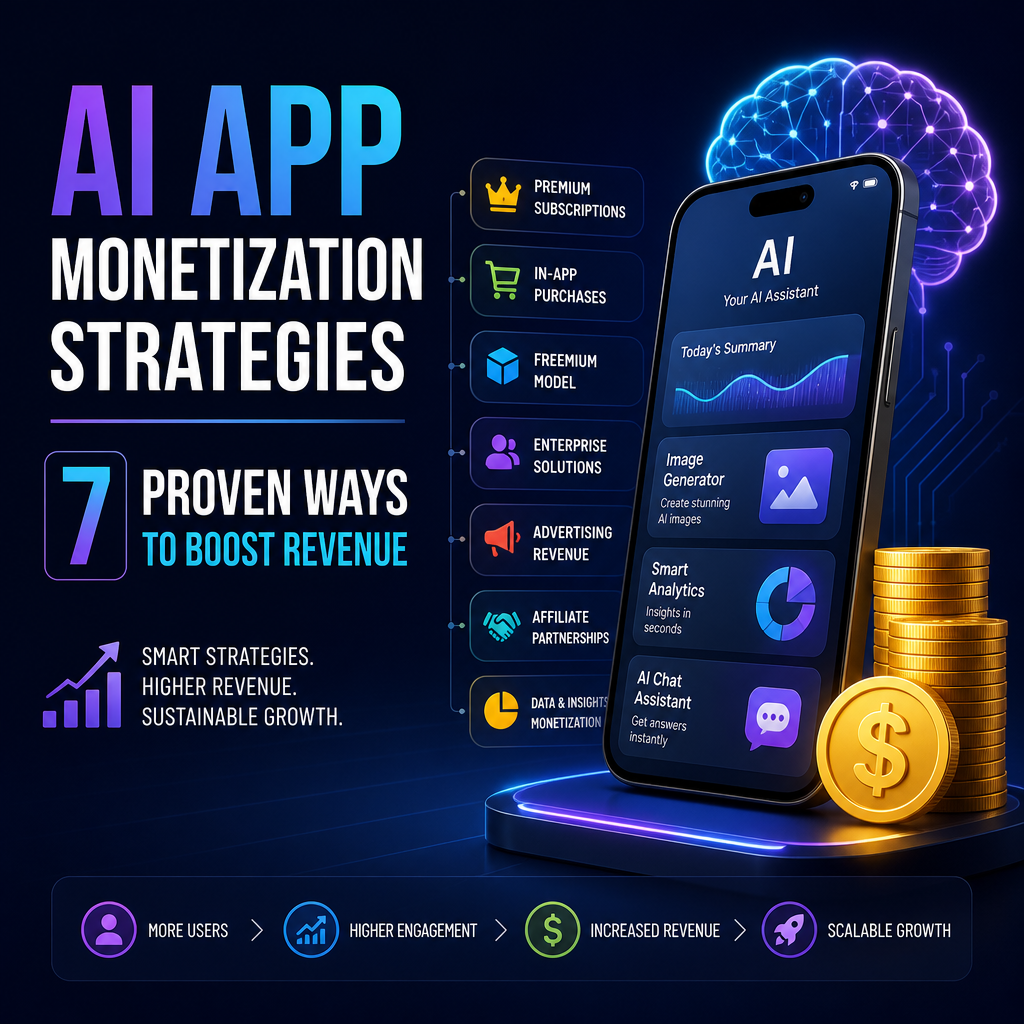
AI App Monetization Strategies: 7 Proven Ways to Boost Revenue
AI App Monetization Strategies: How to Turn Usage Into Sustainable Revenue
Building a useful AI app is only the first step. To make it sustainable, you need a revenue model that supports ongoing costs—such as model access, hosting, and product development—without making the experience feel restrictive.
The most effective AI app monetization strategies connect pricing to the value users receive. That means understanding who your customers are, how often they use the product, and which features solve their most important problems.

Choose a Model That Fits the Product
There is no single best way to monetize an AI app. The right approach depends on the audience, the cost of delivering each interaction, and the app’s role in a user’s workflow.
Freemium With Paid Upgrades
A free tier can help users experience the app before committing to a purchase. Paid plans can then unlock higher usage limits, faster responses, advanced tools, or team features.

The free offering should be useful enough to build trust, but not so generous that it undermines the paid product. Make the difference between tiers easy to understand. For example, a writing app might offer a limited number of drafts for free and provide unlimited projects, brand controls, and collaboration on paid plans.

Subscription Plans
Subscriptions suit apps that deliver ongoing value, such as AI assistants, research tools, and content platforms. Monthly and annual plans provide predictable revenue and give users continued access to updates.
Avoid charging only because the app uses AI. Users are more likely to subscribe when the product reliably saves time, improves work, or supports a recurring task. Include clear plan limits and explain what happens when users reach them.
Usage-Based Pricing
Some apps charge according to consumption, such as the number of generated images, minutes transcribed, or documents processed. This can align revenue with delivery costs, especially when usage varies widely between customers.
Usage-based pricing should be transparent. Show remaining credits, provide cost estimates before large tasks, and notify users as they approach their limits. Unexpected charges can quickly damage trust.
Price Around Value and Costs
AI services may have variable costs per request, so pricing needs to account for both customer value and infrastructure expenses. Estimate the cost of common user actions, including model calls, storage, and support. Then compare those costs with the revenue generated by each plan.
Consider offering several tiers for different needs:
- Free: A low-cost introduction to the core experience.
- Individual: More capacity and convenient premium features.
- Professional: Higher limits, integrations, and advanced controls.
- Team or enterprise: Shared administration, security options, and centralized billing.
Test prices with real users rather than relying on assumptions. Monitor conversion rates, cancellations, support requests, and usage patterns. A plan that attracts sign-ups but costs more to serve than it earns may need different limits or a revised price.
Make Premium Features Meaningful
Paid features should improve the outcome, not simply add complexity. Useful upgrades may include specialized workflows, saved preferences, batch processing, collaboration, export options, or connections to other business tools.
For AI apps, reliability can also be a premium benefit. Users may pay for faster processing, priority access during busy periods, or tools that help them review and refine generated results. Keep essential transparency and safety features available to everyone; trust is part of the product, not just an upgrade.
Explore Business and Partner Revenue
Consumer subscriptions are not the only option. Some AI apps can sell business plans with administrative controls, shared workspaces, or compliance features. Others can generate revenue through licensing, API access, or partnerships with companies that want to add AI capabilities to their own products.
Advertising may work for high-traffic apps, but it can be a poor fit when users expect focused, private, or professional assistance. If you use ads or sponsored recommendations, clearly label them and avoid allowing commercial incentives to distort answers.
Build Trust Into the Revenue Model
AI apps often handle sensitive information or produce content users depend on. Explain how data is stored and used, make cancellation straightforward, and be clear about the limits of AI-generated results. Do not promise accuracy or productivity gains that the product cannot consistently deliver.
The strongest monetization approach is one users can understand and feel good about. Start with a simple model, measure whether it supports both the business and the customer experience, and adjust as usage grows. When pricing reflects real value—and costs are managed carefully—AI app monetization can become a foundation for lasting product growth.
