# From Data to Decisions: AI Workflows That Power Real‑Time Operations
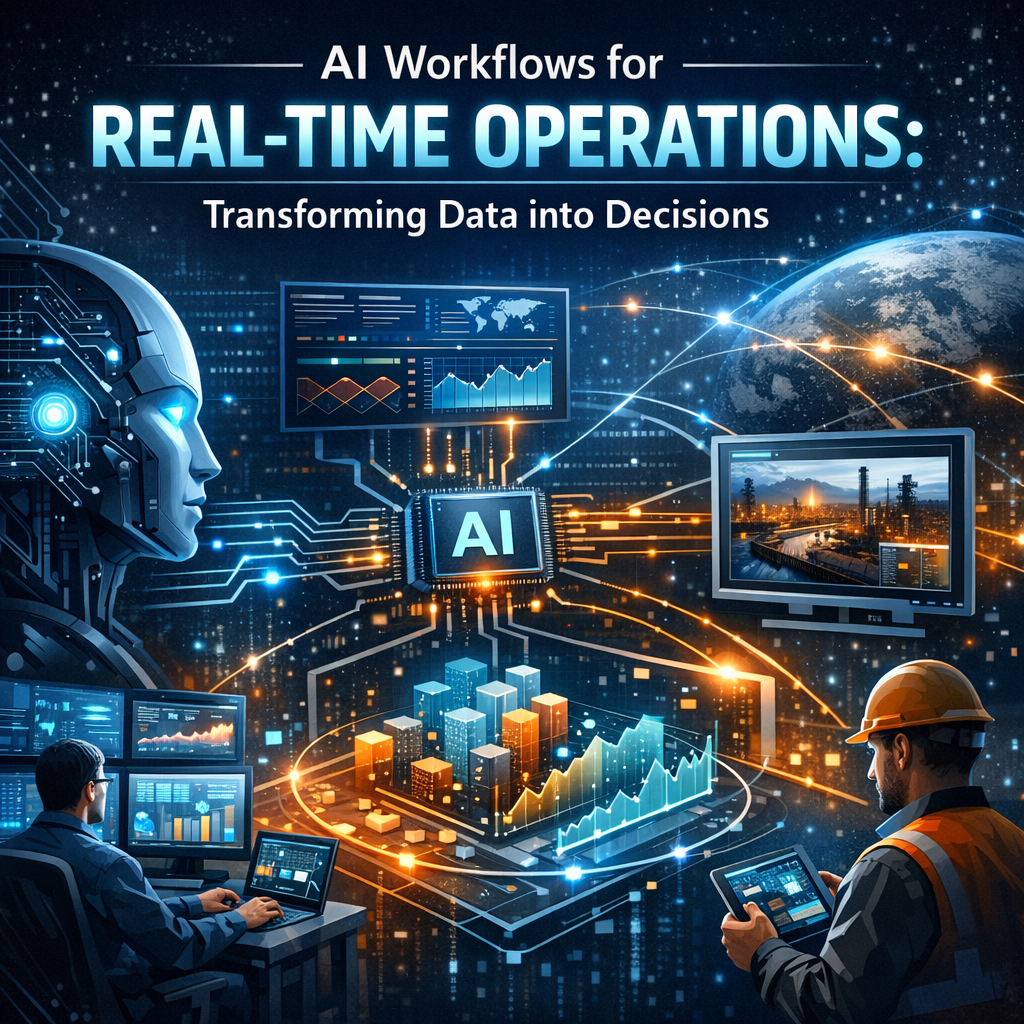
In today's fast-paced business environments, organizations demand efficiency and accuracy more than ever before. This necessity has led to the evolution of Artificial Intelligence (AI) workflows that convert complex data into actionable insights in real time. As we delve into how these AI-driven processes are reshaping industries, we examine how they streamline operations, bolster decision-making, and ultimately drive success.
Understanding AI Workflows
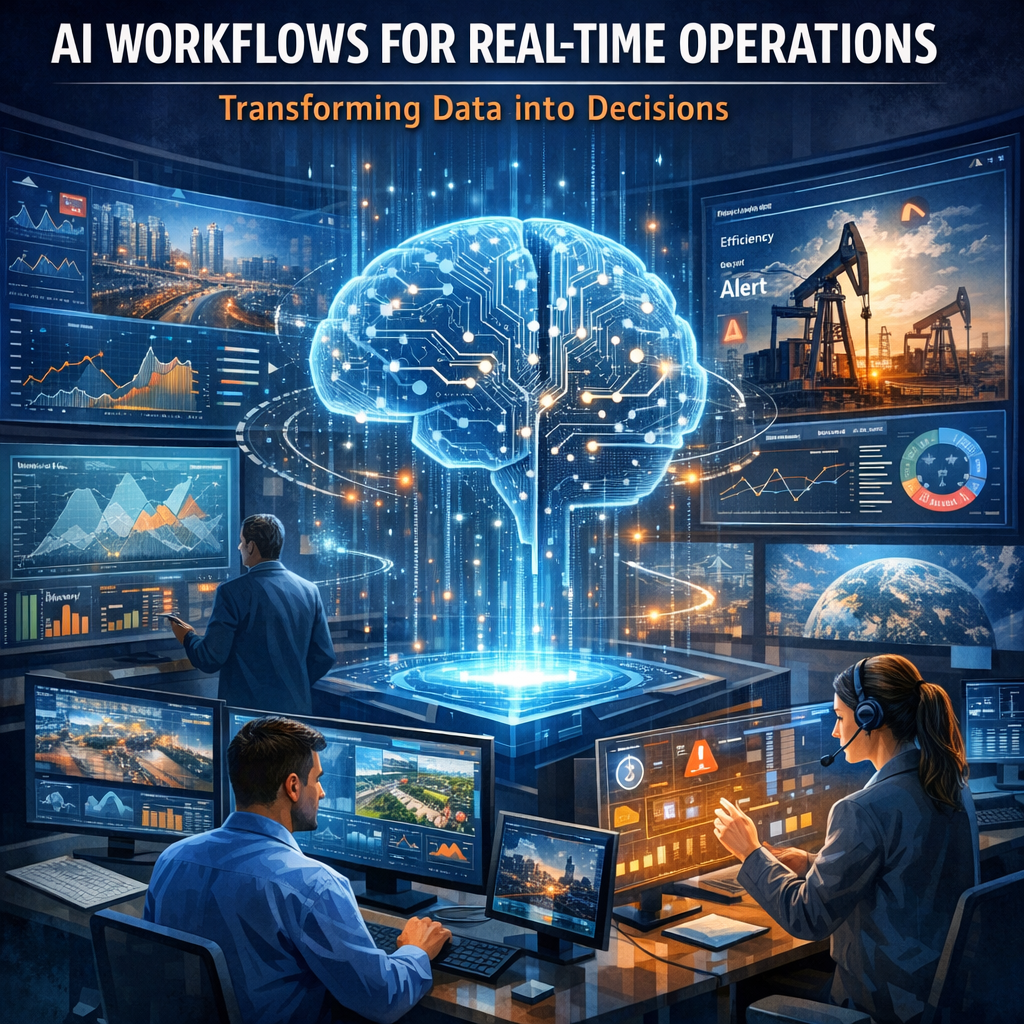 AI workflows refer to the series of steps involved in processing data through machine learning models to produce actionable outputs. These workflows are critical in automating processes and making data-driven decisions that are accurate and timely.
Key Components of AI Workflows
1. Data Collection: Gathering raw data from various sources.
2. Data Processing: Cleaning and structuring data to fit AI models.
3. Model Training: Developing algorithms based on historical data.
4. Model Deployment: Implementing AI models to work on new, real-time data.
5. Data Visualization: Displaying insights in an understandable format.
Implementing AI in Real-Time Operations
Implementing AI to manage real-time operations involves intricate planning and precise execution. Here’s how it's done effectively:
Integration with Existing Systems
AI doesn't work in isolation. Integrating AI workflows with existing IT systems ensures that the data flows seamlessly between processes and avoids operational hiccups.
Scalability and Flexibility
Successful AI implementations are designed to scale and adapt to changing business needs. This means developing workflows that are robust yet flexible enough to handle increasing amounts of data or sudden shifts in operational requirements.
Continuous Learning and Adaptation
AI systems are built to learn continuously from new data, adapting and improving their outputs. This is crucial in environments where operational conditions change frequently.
Case Studies: AI in Action
Transportation Logistics
In transportation logistics, AI workflows optimize routes in real time, predict maintenance issues, and manage inventory levels automatically. For example, AI-powered systems in delivery companies analyze traffic data, weather conditions, and parcel volumes to determine the fastest and most cost-efficient routes.
Healthcare
In healthcare, real-time AI applications range from diagnostic aid tools to patient management systems. AI models help predict patient deterioration, suggest customized treatment plans, and manage resource allocation effectively, thereby improving patient outcomes and operational efficiency.
Manufacturing
AI in manufacturing revolutionizes the production lines by predicting machine failures, optimizing energy use, and enhancing quality control. Real-time data processing allows for immediate adjustments, minimizing downtime and reducing waste.
The Benefits of AI-Driven Decision Making
Enhanced Efficiency
AI workflows automate repetitive tasks, allowing human resources to focus on more strategic activities. This not only speeds up operations but also reduces the likelihood of human error.
Improved Accuracy
AI models are often more accurate in processing large volumes of data than humans. This precision plays a critical role in industries where errors can have significant consequences, such as healthcare and finance.
Proactive Decision Making
With real-time analytics, businesses can anticipate problems before they occur. AI-driven insights allow companies to be proactive rather than reactive, which is essential for maintaining competitive advantage.
Future Trends in AI Workflows
As technology progresses, AI workflows will become more sophisticated and integral to business operations. Future trends may include:
- Greater Emphasis on AI Security: As AI becomes central to operations, protecting AI data and models will become more critical.
- Advanced Natural Language Processing (NLP): Improvements in NLP will make AI better at understanding human language, making AI tools more accessible and versatile.
- AI in Edge Computing: Moving AI processes closer to where data is collected (at the "edge" of the network) to enhance speed and reduce latency.
AI workflows are transforming how businesses operate by making data-driven decisions in real time. As these technologies continue to evolve, their impact on productivity, efficiency, and decision-making will only grow, affirming AI's role as a cornerstone of modern business operations.