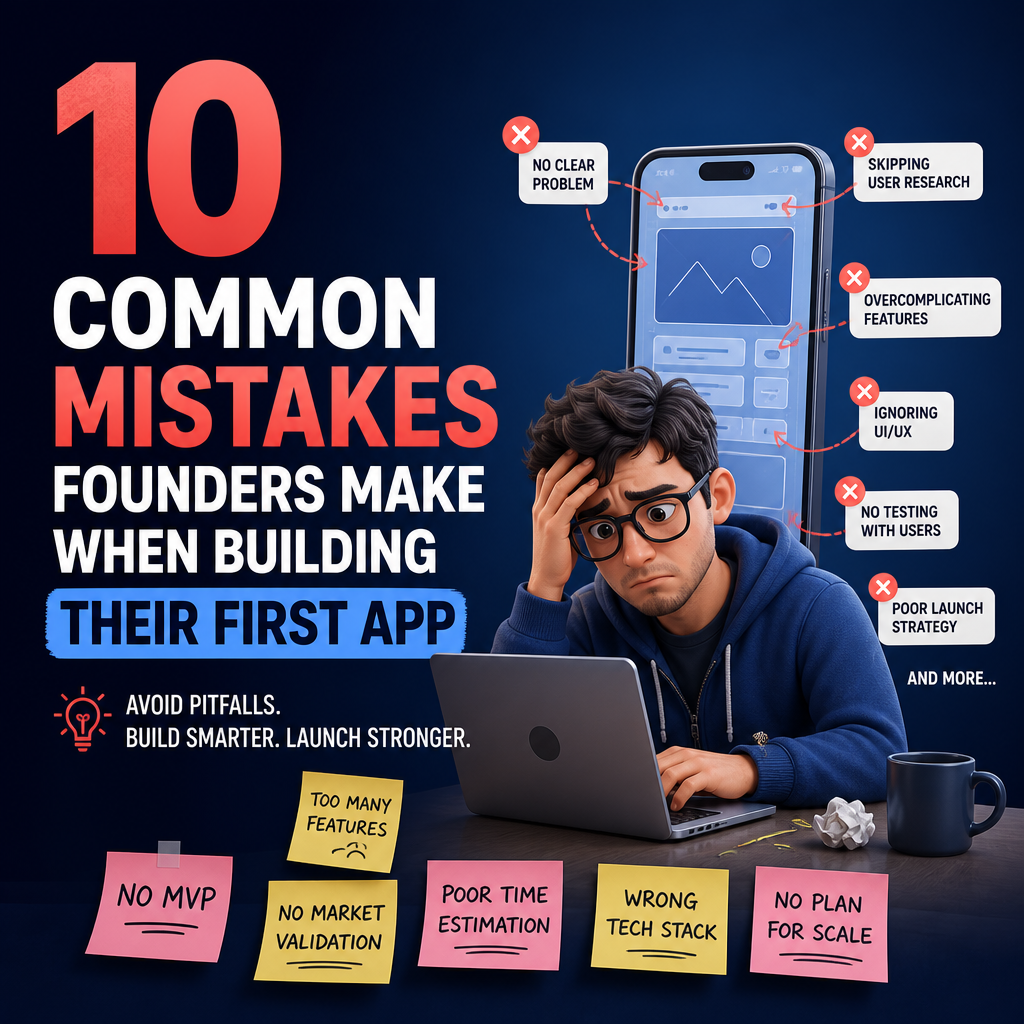
10 Common Mistakes Founders Make When Building Their First App
10 Mistakes Founders Make When Building Their First App
Building a first app is exciting, but it’s easy to spend months creating something users don’t need—or to run out of time and money before launch. Many early mistakes are avoidable with a clear plan, honest user feedback, and a willingness to keep the product simple.
Here are 10 common pitfalls founders should watch for when building their first app.

1. Starting With a Solution Instead of a Problem
An app idea may sound clever, but that doesn’t mean it solves a real problem. Founders sometimes become attached to a feature before confirming that anyone actually needs it.
Start by identifying a specific frustration experienced by a particular group of people. Talk with potential users about how they handle it today, what feels difficult, and whether they would change their habits to try something better.

2. Trying to Serve Everyone
A product designed for “anyone who owns a phone” is difficult to explain and even harder to build. Different audiences have different needs, expectations, and reasons to use an app.

Choose an initial audience with a clear, shared problem. A focused first version can still grow over time, but starting with a defined user group makes product decisions much easier.
3. Building Too Many Features
Founders often imagine a polished app with every possible capability. The result can be a long development cycle, a confusing experience, and a larger budget.
Instead, identify the core action the app should help users complete. Build the smallest useful version around that action, then add features based on real feedback—not assumptions.
4. Skipping User Research
Friends and family may be encouraging, but their opinions are not always a reliable measure of demand. People might say they like an idea without ever downloading or using the app.
Speak with people who match your intended audience. Ask open-ended questions about their current behavior rather than pitching your idea and asking whether they like it. Observe how they respond to a basic prototype whenever possible.
5. Choosing Technology Without a Plan
Selecting a programming language, platform, or development framework because it is popular can create problems later. The right choice depends on the app’s requirements, team skills, budget, and plans for growth.
Compare options before development begins. Consider whether the app needs to work on iOS and Android, what integrations it requires, and who will maintain it after launch. A practical technology choice is usually better than the newest or most fashionable one.
6. Treating Design as Decoration
Good design is more than colors and logos. It helps users understand what to do, complete tasks, and recover when something goes wrong.
Plan the main user journey before polishing visual details. Keep navigation clear, use familiar patterns, and test early screens with potential users. A simple, usable interface is more valuable than a beautiful one that causes confusion.
7. Ignoring the Budget Beyond Development
App costs don’t end when the first version is built. Hosting, software subscriptions, security, bug fixes, customer support, marketing, and future updates all require time or money.
Create a realistic budget that includes ongoing expenses. Set aside room for unexpected technical issues, and decide how the app will generate revenue—or otherwise support the business—before spending heavily.
8. Delaying Testing Until Launch
Waiting until the app is nearly finished to test it can make basic problems expensive to fix. Users may struggle with the signup process, misunderstand key features, or encounter bugs on devices the team hasn’t checked.
Test throughout development. Invite a small group to try prototypes and early builds, then watch where they get stuck. Regular testing helps the team make improvements while changes are still manageable.
9. Assuming Launch Is the Finish Line
A launch is a beginning, not a final milestone. An app needs ongoing attention as users report issues, operating systems change, and competitors introduce new options.
After launch, monitor crashes, usage patterns, reviews, and support requests. Focus on fixing the biggest problems first, and communicate clearly when users report an issue.
10. Ignoring Marketing Until the App Is Ready
A useful app can still struggle if nobody knows it exists. Founders who begin promoting only at launch may find it difficult to attract initial users or build momentum.
Start telling the story early. Share the problem you’re solving, connect with relevant communities, and invite potential users to join a waitlist or test the product. Early conversations can improve both the app and its launch plan.
Build, Learn, and Improve
Building a first app involves uncertainty, but it doesn’t require guessing at every step. Focus on a real user problem, keep the first version manageable, and test your assumptions as early as possible.
The strongest early products are rarely perfect. They’re useful enough to earn attention, simple enough to understand, and flexible enough to improve as founders learn what users actually need.