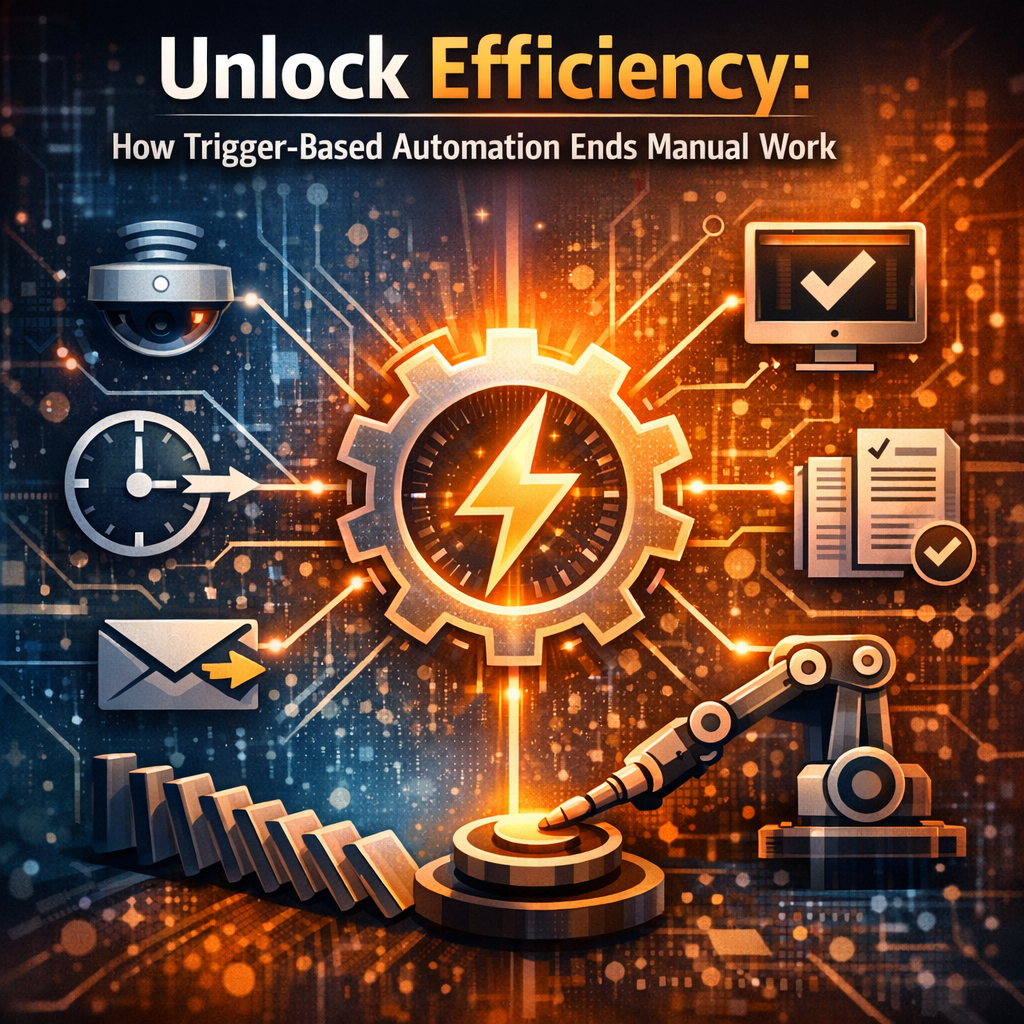
Unlock Efficiency: How Trigger-Based Automation Ends Manual Work
How Trigger‑Based Automation Replaces Manual Work Forever
In today’s fast-paced business environment, efficiency and productivity are paramount for success. Automation, particularly trigger-based automation, is revolutionizing how businesses operate by minimizing the need for manual intervention. This powerful technology can streamline operations, reduce errors, and free up employees for more complex tasks. Let’s delve into how trigger-based automation is transforming the business landscape and easing the burden of manual work.
What is Trigger-Based Automation?
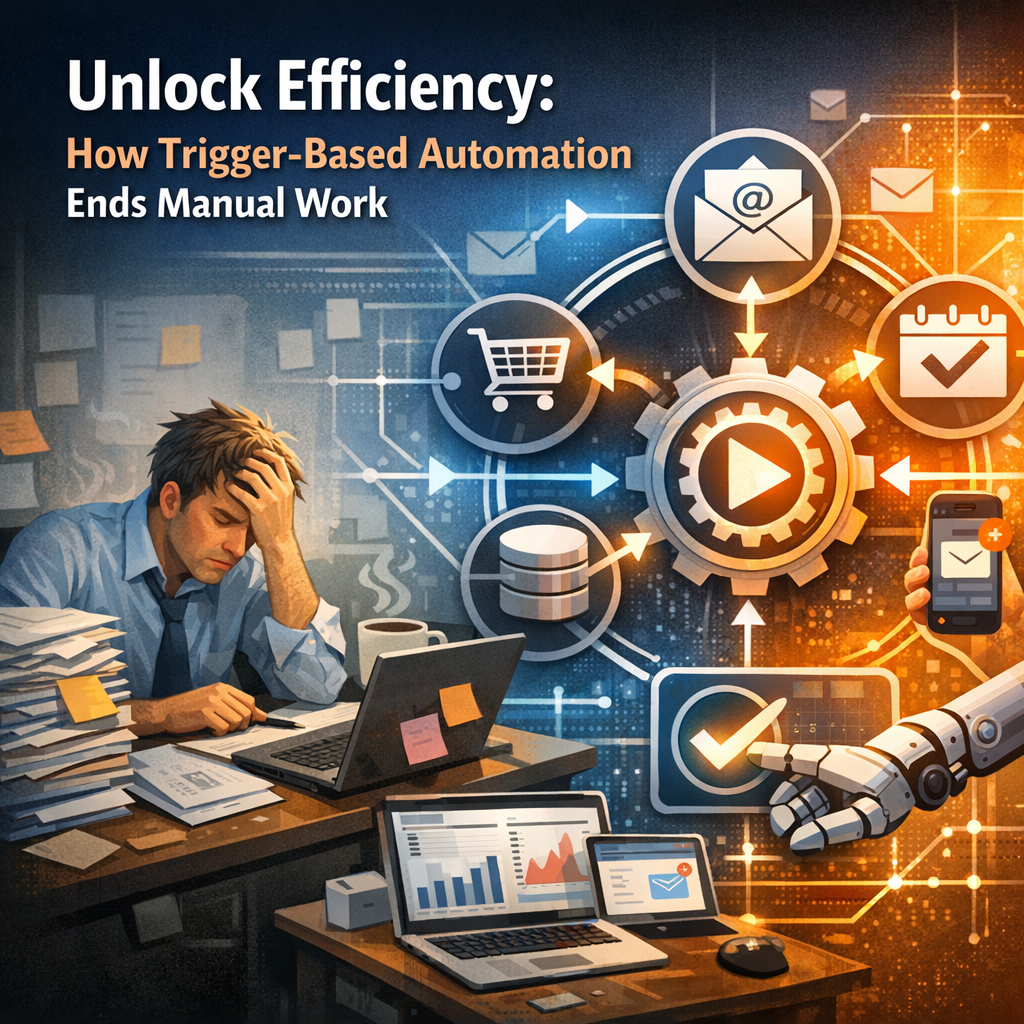
Trigger-based automation refers to the use of specific events or conditions to initiate automated workflows or actions. When a predefined trigger occurs, it automatically prompts a series of actions, thus ensuring that tasks are carried out swiftly and precisely without human intervention.

Examples of Trigger Events:
- A new customer registration on a website
- Receipt of an email
- Update of a record in a database
- Scheduled time or date
Key Benefits of Trigger-Based Automation
1. Increased Efficiency
Automated workflows eliminate the need for manual task management, which in turn speeds up operations and reduces the chance for delays. Processes like data entry, notifications, and report generation can occur seamlessly in the background.
2. Improved Accuracy
Human error is a common issue in manual processes. Automation significantly reduces these errors by following exact, pre-set workflows, ensuring consistent results every time.

3. Enhanced Customer Experience
Automated triggers can react instantaneously to customer interactions, such as sending a welcome email immediately after registration, thereby enhancing customer satisfaction with prompt responses.

4. Scalability
As a business grows, so does the volume of tasks. Automation can easily scale to handle increased workload without the need to add additional staff, thus managing growth more effectively.
5. Employee Empowerment
By automating routine and mundane tasks, staff can focus on more strategic and creative work, which can lead to higher job satisfaction and productivity.
How Businesses Are Implementing Trigger-Based Automation
Organizations across various sectors are adopting trigger-based automation to streamline operations. Here are a few practical applications:
1. Marketing Automation
Marketers use triggers to send tailored messages based on user behavior, such as browsing history or shopping cart abandonment. This results in more personalized communication and higher conversion rates.
2. Customer Service
Automated tickets can be generated and assigned when a customer submits a query, ensuring none falls through the cracks. Follow-up tasks can be triggered based on the type of query or customer priority, improving service levels.
3. HR and Onboarding
New employee onboarding involves a series of tasks that can be fully automated, from sending out welcome emails to scheduling training sessions, creating a smoother start for new hires.
4. Finance and Accounting
Invoices can be automatically triggered when a sale is made, and follow-ups can be set for payments, ensuring timely receivables management.
Best Practices for Implementing Trigger-Based Automation
Before jumping into automation, consider these best practices to ensure success:
- Identify Repetitive Tasks: Look for high-frequency, low-complexity tasks that are necessary but do not require strategic decision-making.
- Define Clear Triggers and Actions: Specify exactly what events should initiate actions and what those actions should be to avoid errors.
- Choose the Right Tools: Select automation tools that integrate well with your existing systems and are adaptable to changing business needs.
- Train Your Team: Ensure staff understand how to manage and interact with the new automated processes.
- Monitor and Iterate: Continuously track the performance of automated workflows and make adjustments as needed.
The Future of Work with Automation
As technology continues to evolve, the scope of tasks that can be automated will undoubtedly expand. Trigger-based automation not only replaces manual work but does so in a way that increases efficiency, accuracy, and scalability. This shift allows employees to engage in more meaningful and rewarding work, preparing businesses for future growth and innovation.
Automation isn’t about replacing jobs; it’s about enhancing capabilities and redefining processes. As companies increasingly adopt these technologies, they position themselves as competitors in an ever-evolving market, streamlined not just for success but for excellence.