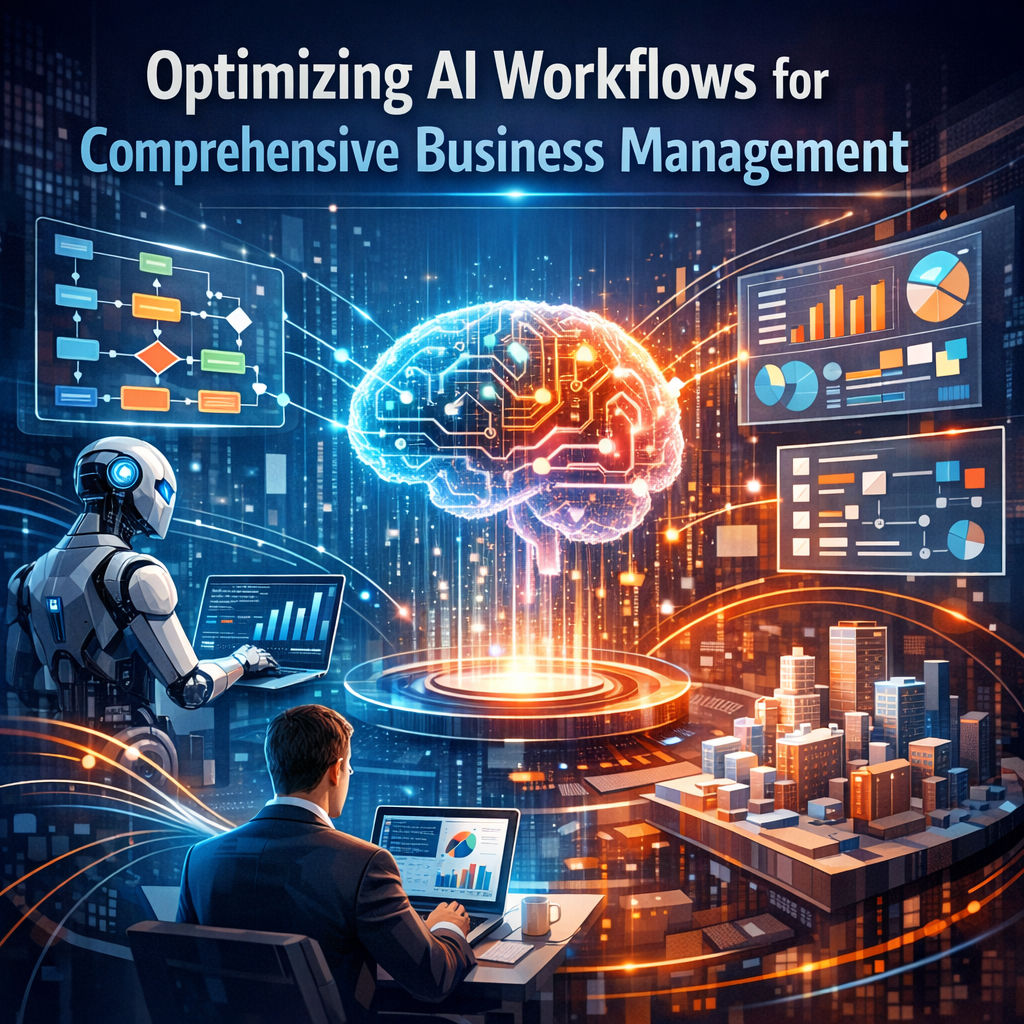
Optimizing AI Workflows for Comprehensive Business Management
Designing AI Workflows That Run Entire Business Operations
Artificial Intelligence (AI) has transformed from a burgeoning innovation to a core component of modern business operations. Enterprises across sectors are leveraging AI to streamline processes, enhance decision-making, and ultimately drive efficiencies at scale. This article explores how businesses can design effective AI workflows capable of overseeing entire business operations.
Understanding AI Workflows
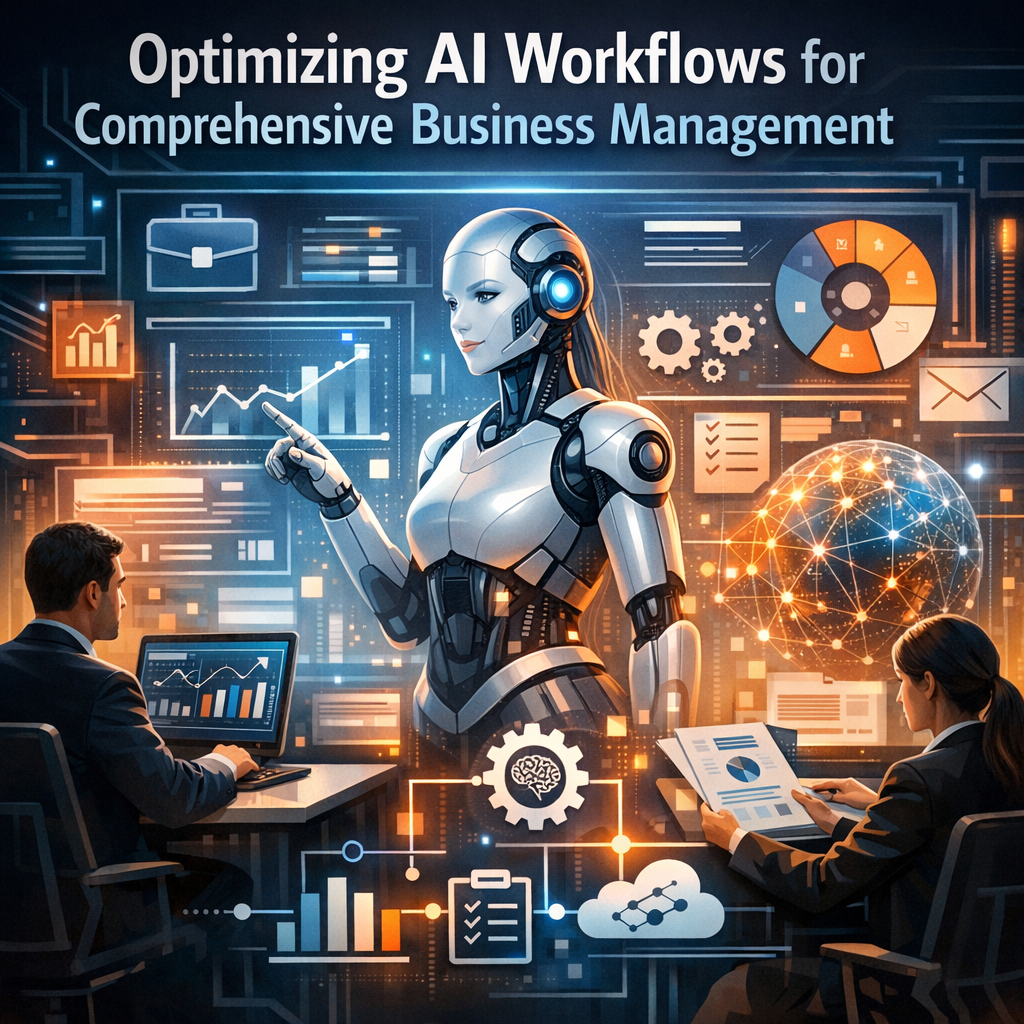
AI workflow refers to a structured sequence of processes performed by AI systems, designed to accomplish specific tasks or solve problems within a business context. An effective AI workflow integrates various components including data ingestion, data processing, model training, prediction making, and feedback loops.

Key Components of an AI Workflow:
- Data Management: Handling vast datasets strategically for input into AI models.
- Model Development: Creating predictive or prescriptive models based on business needs.
- Integration: Seamlessly connecting AI outputs with existing business systems.
- Monitoring and Maintenance: Continuously assessing AI system performance.
Strategic Design of AI Workflow
Designing an AI workflow that can manage entire business operations requires a strategic approach that aligns technical capabilities with business objectives.
Step 1: Define Clear Objectives
Start by clearly defining what the AI is supposed to achieve. Whether it’s improving customer service, optimizing supply chain logistics, or automating financial forecasts, having a clear objective is crucial.

Step 2: Ensure Quality Data
AI systems are only as good as the data they process. Ensure your data is accurate, comprehensive, and continually updated. Implement systems for regular data cleaning and validation.

Step 3: Choose the Right Tools and Technology
Select tools and platforms that best suit your business needs and are scalable. Consider cloud services for flexibility and scalability.
Step 4: Build Cross-Functional Teams
Create a team comprising AI experts, data scientists, and sector-specific professionals to ensure the workflow is holistic and comprehensive.
Step 5: Integrate and Automate
Seamlessly integrate AI outputs with other business systems and processes. Automation of repetitive tasks can free up valuable resources and increase efficiency.
Step 6: Monitor and Optimize
Constant monitoring allows for the identification of operational inefficiencies and areas for improvement. Regular updates to the AI models should be based on new data and feedback.
Benefits of AI-Driven Business Operations
Implementing AI workflows brings multiple benefits to business operations:
- Increased Efficiency: Automation of routine tasks speeds up operations and reduces human error.
- Enhanced Decision Making: AI’s predictive capabilities enable more accurate and quicker decision-making.
- Scalability: AI can handle increasing operations without the need to proportionally increase resources.
- Customer Satisfaction: Improved responsiveness and personalization enhances overall customer experience.
Challenges and Considerations
While AI can significantly enhance operational efficiency, it’s not without challenges:
Data Privacy and Security
Handling data responsibly and ensuring its security is paramount, especially with stringent regulations like GDPR in place.
Complex Systems Integration
Integrating AI within existing complex systems can be challenging and requires robust planning and execution.
Continuous Learning and Adaptation
AI systems must continually evolve with changing business environments, requiring ongoing training and model adjustments.
Conclusion
Designing AI workflows that run entire business operations is not merely about technology implementation but also about strategic planning and integration. The blend of clear objectives, robust data handling, cross-functional teamwork, and continuous optimization forms the backbone of effective AI-driven workflows. As we move forward, AI will increasingly become a non-negotiable aspect of business operations, pushing companies to innovate continually and redefine industry standards.