What Is Vibe Coding? Why Entrepreneurs Are Embracing It
What Is Vibe Coding?
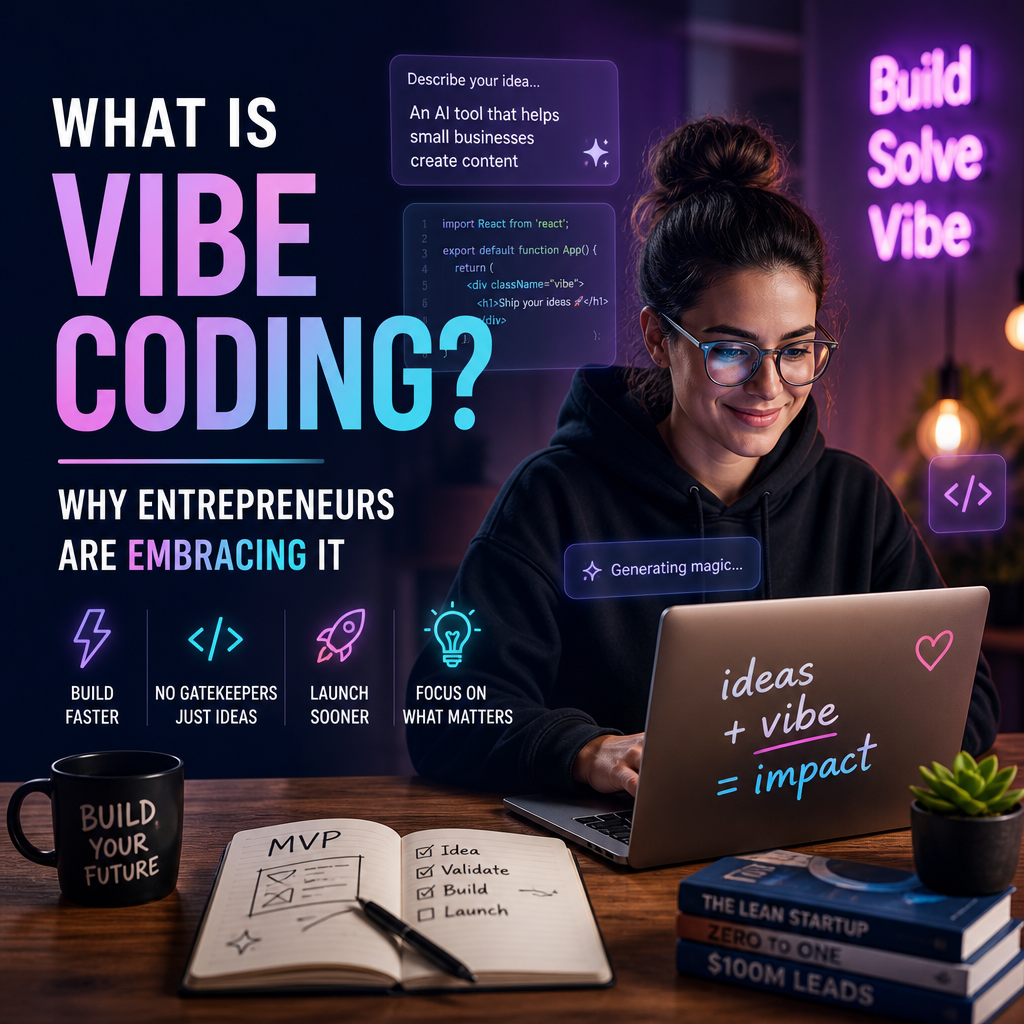
Vibe coding is a way of building software by describing what you want in plain language and asking an AI tool to generate the code. Instead of writing every line yourself, you explain an idea, review the result, and refine it through follow-up prompts.
The term is often associated with AI coding assistants and app-building platforms that can create websites, prototypes, and simple tools from conversational instructions. A founder might ask an assistant to build a booking page, add a customer sign-up form, or change the colors and layout. The AI produces code, while the founder guides the direction.

Vibe coding does not mean software development has become completely effortless. The person building the product still needs to make decisions, test the result, and spot problems. But it changes how people interact with code: they can focus more on what the software should do and less on how to write each instruction in a programming language.
Why Entrepreneurs Are Embracing It
Ideas can become prototypes faster
For entrepreneurs, speed matters. A traditional development process can require finding a technical co-founder, hiring a developer, or spending weeks creating a first version. With vibe coding, a founder may be able to produce a rough prototype in hours or days.

That prototype can help answer practical questions:

- Do customers understand the product?
- Which features matter most?
- Is the idea worth investing more time and money in?
A working demo is often more useful than a long description. Entrepreneurs can show users what they are proposing, gather feedback, and adjust the concept before committing to a larger build.
It lowers the barrier to experimentation
Not every early-stage idea needs a polished application. A simple internal dashboard, landing page, calculator, or workflow tool may be enough to test an assumption. AI coding tools make it easier for people without formal programming backgrounds to experiment with these smaller projects.
This can reduce the cost of trying an idea. Instead of treating every possible product as a major investment, a founder can build a limited version, see how it performs, and decide whether to continue.
Founders can stay close to the product
Entrepreneurs often have a clear picture of the problem they want to solve but may struggle to communicate every detail to a development team. Vibe coding lets them turn product decisions into immediate changes. They can adjust a page, test a feature, or explore a different user flow while the idea is fresh.
That direct involvement can make early product development more responsive. It also gives founders a better understanding of what is easy, difficult, or uncertain about their proposed solution.
What Vibe Coding Is Good For—and What It Isn’t
Vibe coding works especially well for prototypes, simple websites, small automations, and early experiments. It can help a business owner create a proof of concept, build a tool for a narrow task, or demonstrate a product to potential customers.
However, generated code is not automatically reliable or secure. An application that looks finished may still contain errors, expose sensitive information, or fail when many people use it. AI tools can also misunderstand instructions or produce code that is difficult to maintain.
For a business-critical product, human review remains essential. Founders should pay particular attention to:
- Security: Protect user data, passwords, and payment information.
- Testing: Check the application on different devices and with realistic scenarios.
- Reliability: Confirm that important features work consistently.
- Maintenance: Make sure someone can update and repair the software over time.
A prototype and a production-ready product are not the same thing. Vibe coding can help move an idea forward, but it does not remove the need for technical expertise when reliability, privacy, or scale is important.
How Entrepreneurs Can Use It Wisely
Start with a small, specific goal. Rather than asking an AI to build an entire business platform, describe one task, such as collecting customer inquiries or tracking a few key metrics. Clear requirements usually produce more useful results.
Then work in short cycles:
- Explain the problem and the intended user.
- Ask for a simple first version.
- Test it yourself and note what is confusing or broken.
- Request focused changes instead of rewriting everything at once.
- Ask a qualified developer to review the code before using it for sensitive or business-critical work.
This approach keeps the process grounded in user needs rather than novelty. It also makes it easier to notice when the project has grown beyond what a quick AI-generated solution can safely support.
A New Tool for Turning Ideas Into Action
Vibe coding is changing who can participate in early software creation. Entrepreneurs can explore ideas sooner, make tangible prototypes, and learn from customers before investing in a full development effort.
Its strongest role is not replacing every developer. It is helping founders move from concept to experiment with less friction. Used thoughtfully—and paired with testing and expert review when needed—vibe coding can be a practical way to discover which ideas deserve to become real products.